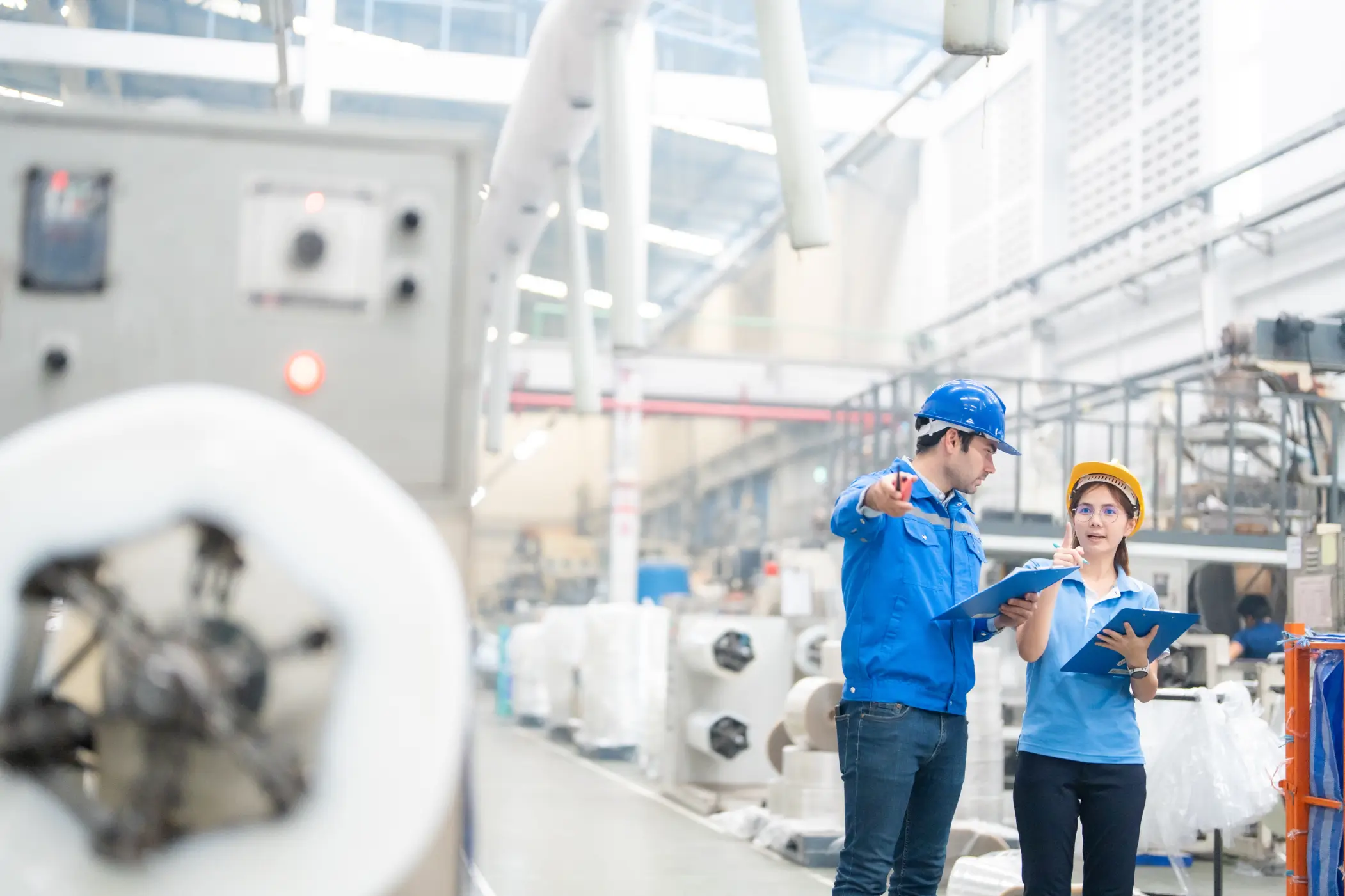

Xiamen Milai Intelligent launched a new generation of disposable underwear fully automatic production line
Xiamen Milai Intelligent Equipment Co., Ltd. (Milai Intelligent Equipment) is a leading enterprise in automated production solutions for sanitary products. Its products cover all types of production lines such as disposable underwear, sanitary napkins, diapers, etc., serving 300 + customers around the world, and exporting to Europe, America, South East Asia and other countries and regions.
As a national high-tech enterprise, Xiamen Milai Intelligent has been deeply involved in the field of intelligent equipment for sanitary products for more than ten years, and has obtained 128 patents and led the formulation of a number of industry standards. The new generation of production line released this time not only passed the ISO 13485 medical apparatus quality management system certification, but also pushed the technical strength of "China Intelligent Manufacturing" to the global stage.
production line carrying
6台高精度六轴机器人,配备自主研发的超声波焊接模组(焊接精度达±0.1mm),同步完成弹性腰围贴合、立体臀杯成型、腿部橡筋定位等关键工序。相较于传统人工操作,焊接强度一致性提升至99.8%,完美解决医用级产品的密封性能难题。
Innovative deployment
12 groups of high-speed CCD cameras + deep learning algorithm
, 360 no dead angle detection of products: from fabric defects, stitch density to rubber band elastic attenuation, identification and sorting can be completed within 0.3 seconds. The system supports automatic iteration of 100 + product defect libraries, and the defective rate is stably controlled at
0.2% or less
This is 60% lower than the industry average.
By building a digital twin model of the production line, more than 200 indicators such as equipment crop rate, energy consumption curve, and raw material loss can be monitored in real time. Customer cases show that an enterprise has shortened the order delivery cycle by 28% through system optimization of production scheduling, and the utilization rate of raw materials has increased to 98.5%. The annual cost savings exceed 8 million yuan.
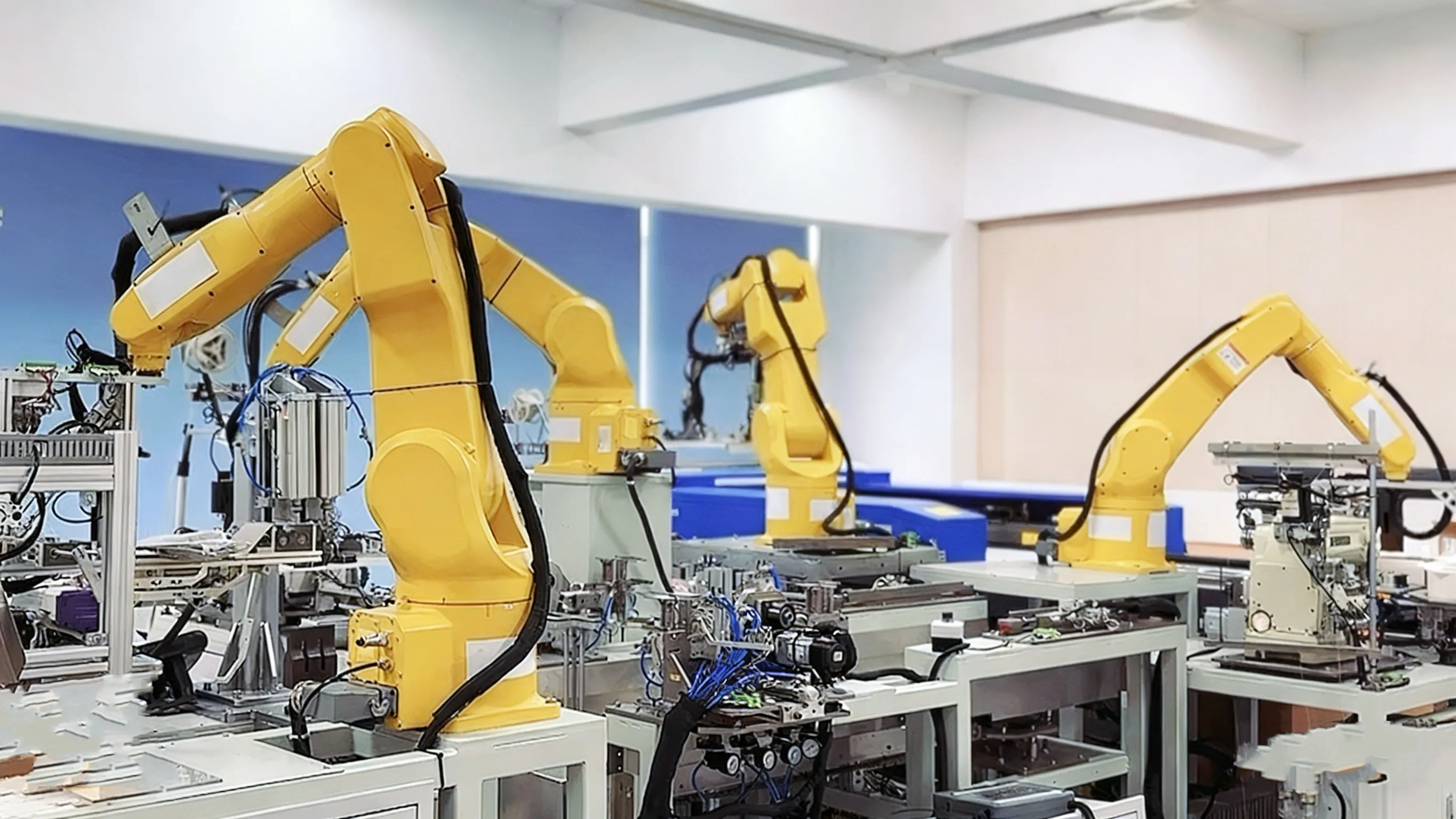
The yellow six-axis robot cluster, the core station of the fourth-generation disposable underwear production line of Xiamen Milai Intelligent, is conducting ultrasonic welding operations. The visual sensor mounted on the end of the robotic arm scans the product outline in real time, and the human-machine interface synchronously displays welding pressure, temperature and other process parameters. The production line adopts a modular design, which supports the rapid switching of cotton soft, non-woven fabrics, antibacterial and other multi-material products, and the changing time is shortened to 20 minutes.
Industry flagship customer verification
- Hengan Group
After the medical care product line went into production, the daily production capacity was increased to 2 million pieces, and it passed the European Union CE Class I medical apparatus certification; - Cotton era
The use of a robotic sorting system has reduced labor costs by 70%, enabling the continuous operation of the "black light factory". - South East Asia Merchants
Through the energy management module, the annual power saving 1.20 million kWh, carbon emissions reduced by 1500 tons.